Review · September 24, 2026 · RT ~11 min
New World: Bonds of Shadows Review: The Two-Player Film That Finally Justifies the Format
Shanghai 1941, a fake marriage, a hundred endings, and a first choice that asks whether you trust the stranger on the other screen. Our full review of ALT Lab's two-player interactive film, played on launch day.
The first thing New World: Bonds of Shadows asks you to do is trust someone you have never met.
Twenty five minutes into the prologue, a bomb has torn through a Shanghai bank. Your character is crouched behind the teller counter with plaster dust still in the air. The prompt that appears is not a dialogue wheel. It is two options: cover each other, or every man for himself. And along the same bar, a line of text tells you that your partner is choosing right now, with an animated ellipsis, and you have no idea what they are picking.
I was playing Yan Shu, the banker’s daughter. On the other screen, somewhere in China, was a stranger the lobby had handed me ninety seconds earlier. We had never exchanged a word. I chose to cover them. The reveal put both answers side by side, and they had chosen the same.
That is the thesis of this production, delivered in its first interactive moment. It is also the best argument anyone has made in years for why interactive film should exist at all.
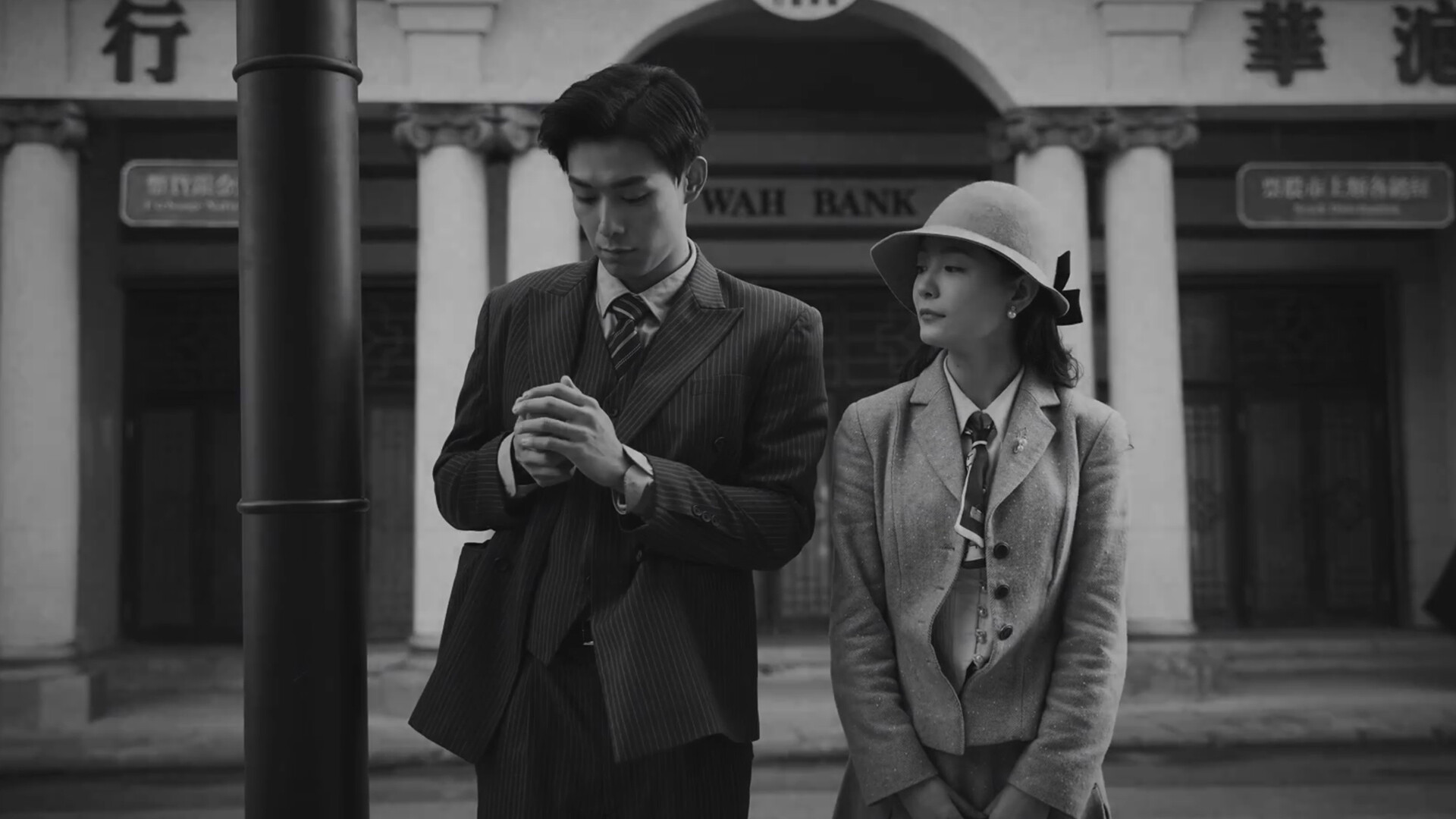 Shanghai, 1941. Two strangers about to be tied together by a bombing neither of them planned.
- Developer
- ALT Lab
- Publisher
- ALT Lab
- Released
- September 22, 2026
- Platforms
- Windows, macOS, iPhone, iPad
- Players
- Two, online, with matchmaking
- Choice points
- More than 130
- Endings
- Close to one hundred
- Language
- Simplified Chinese, full voice
- Price
- 9.99 USD on Steam. Free on mobile with a 28.8 RMB unlock per player
- Time to an ending
- About one hour
- Reviewed on
- iPhone, version 1.0.4.3.7286, in matched online sessions
Shanghai, 1941, and a marriage neither of them chose
The setting is the gudao, the isolated island: the years when the foreign concessions of Shanghai floated inside occupied China like a lit room in a dark house. Money moved through that room. So did everyone who wanted the money.
You play one of two people. Lu Weicheng, an intelligence operative who works under the code name Frost Blade. Or Yan Shu, the only daughter of the Yan family money house, introduced with a caption that names her father and his bank before it names her. A bombing throws them together, and the only way either survives the factions closing in is to pass, publicly and convincingly, as husband and wife.
Who plays whom is the first thing you and your partner settle, before a frame of film rolls, through a single request-and-accept prompt. It is not cosmetic. The two roles see different things, know different things, and are believed by different people.
ALT Lab, the studio behind the Cannes Next selected Breakout 13, has not built a game with cutscenes here. It has built a film that occasionally hands you the wheel, and the difference is visible in every shot.
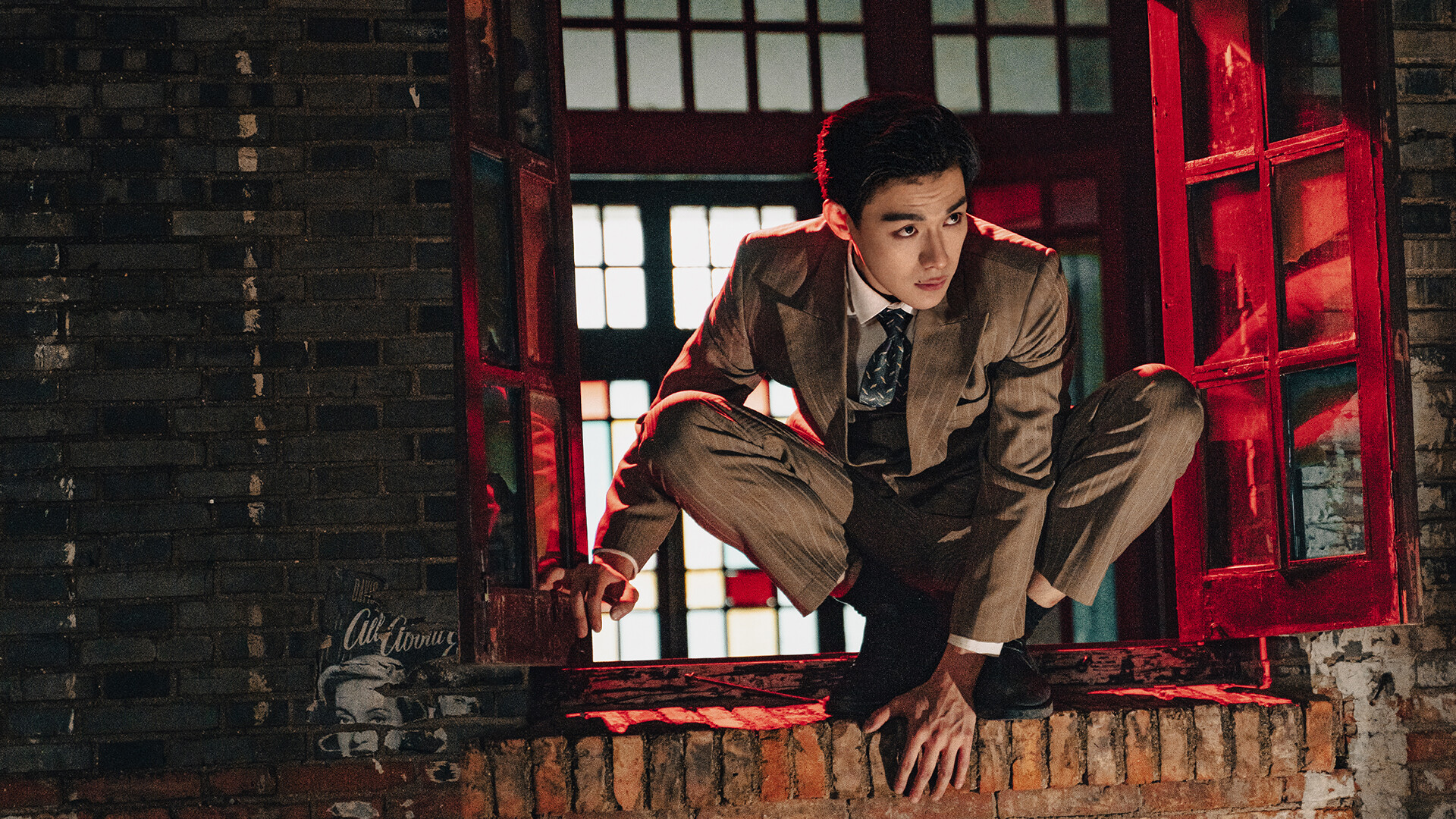 The production does not cut corners on the city.
It opens like a documentary, then becomes a thriller
The prologue is titled Pact of Blood, and it begins with genuine archive footage. Aerial bombing runs. Explosions walking along a rail line. A narrator’s line about the economic arteries of a country.
Then a montage of period newspaper pages: a bank run, a crowd with its hands raised, men in hats beside a black car. Four characters fill the frame and they translate as surviving in the gap, caught between two sides, which is a better summary of the city in 1941 than most history books manage in a chapter.
Only then does the fiction start, and it starts small: a woman’s hand holding an ornate mirror, a wedding ring catching the light, the background falling away into bokeh.
The photography earns that shallow focus. The grade is a cool blue-grey that turns brass warm and skin cold. The bank hall has a chandelier and a wall-mounted map. There is a chalk quotation board with real company names and real prices, and somebody is updating it by hand while the scene plays behind them. The tram that crosses the main menu is a working tram on a real street set, and it crosses again on the next visit, at a different point in its run.
When an officer takes Yan Shu by the chin and forces her head back, the performance holds in close-up. That is precisely where thinner productions in this genre fall apart, and this one does not.
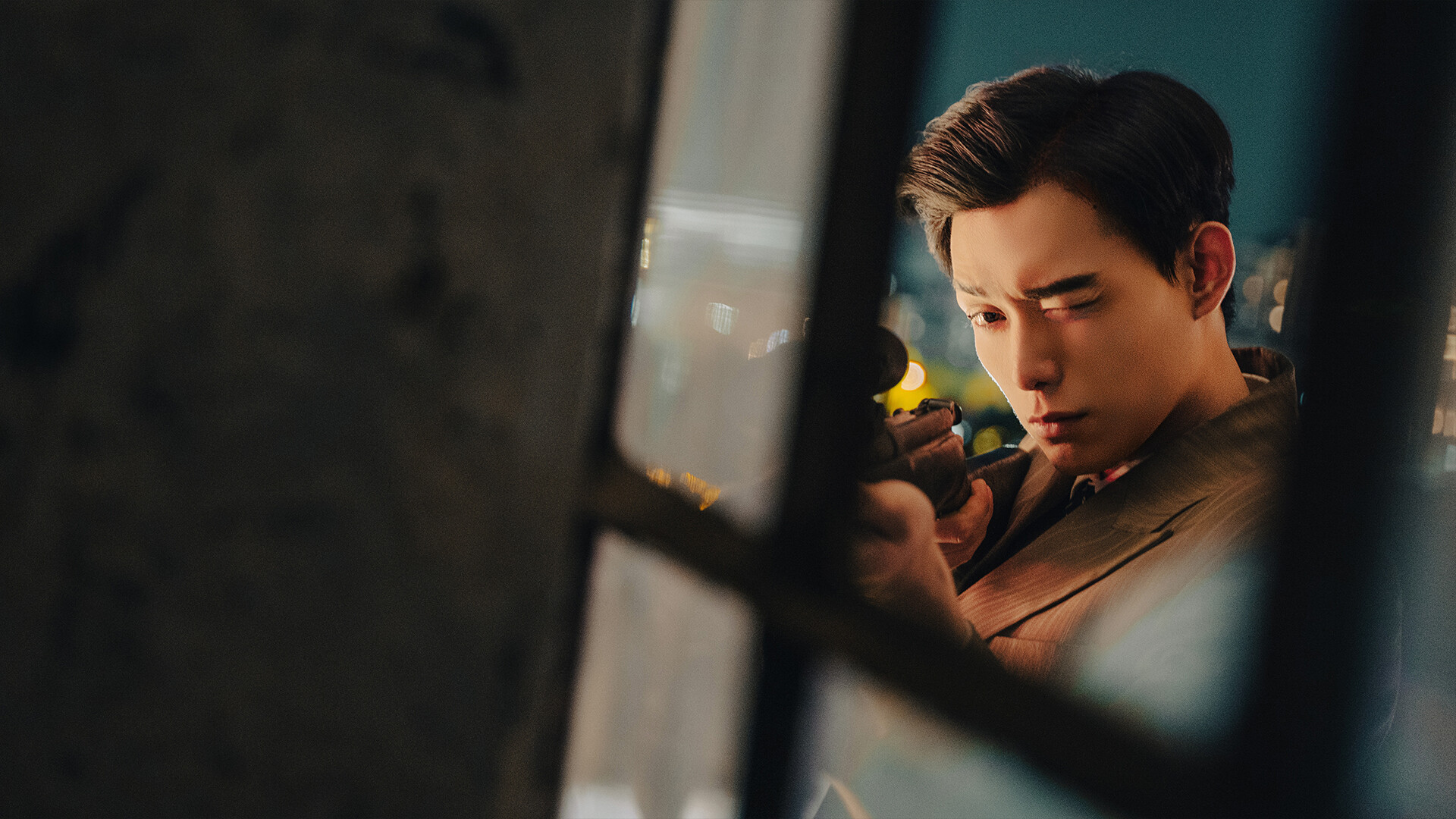 Real lenses, practical light, and a lot of the frame left in shadow.
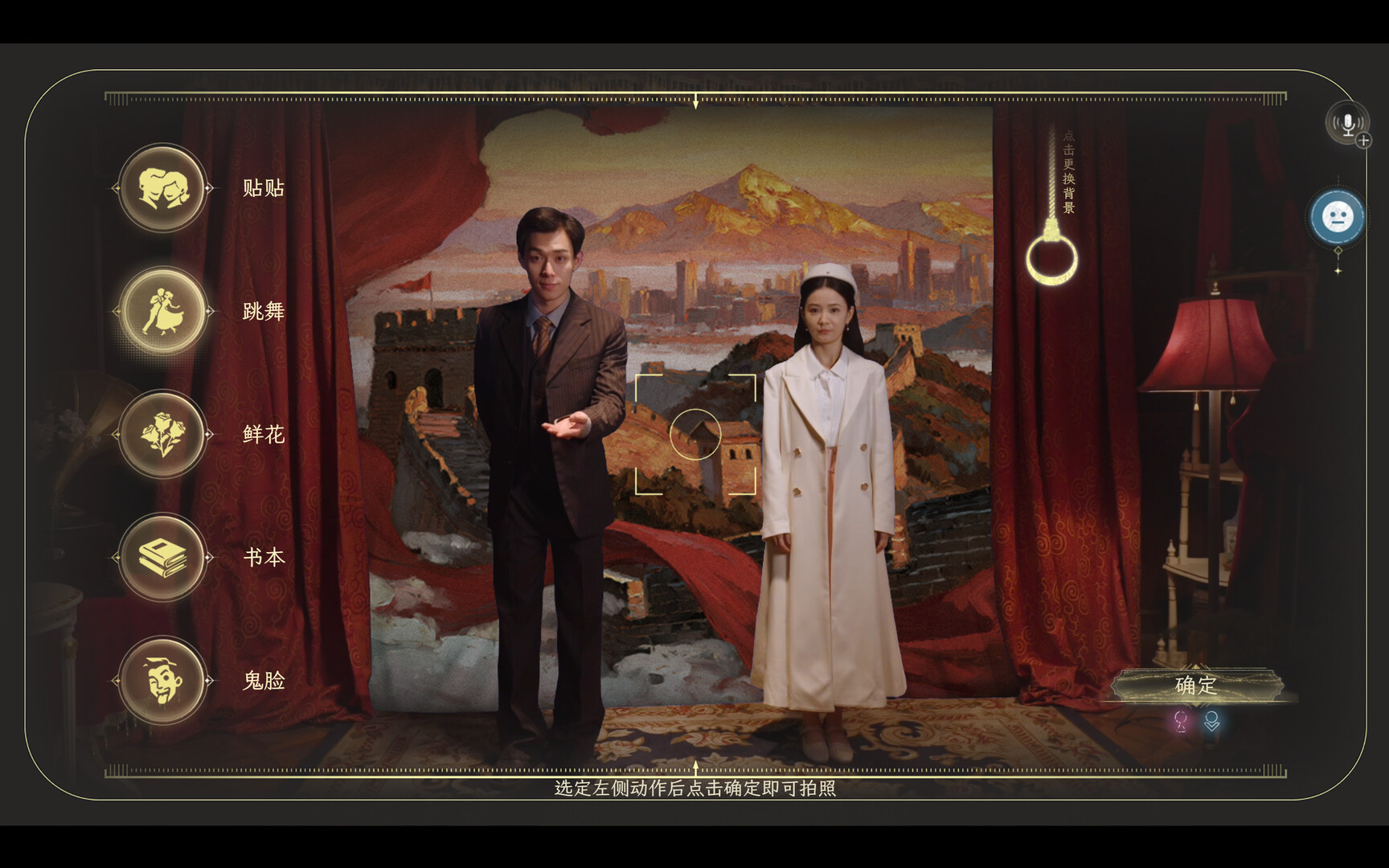
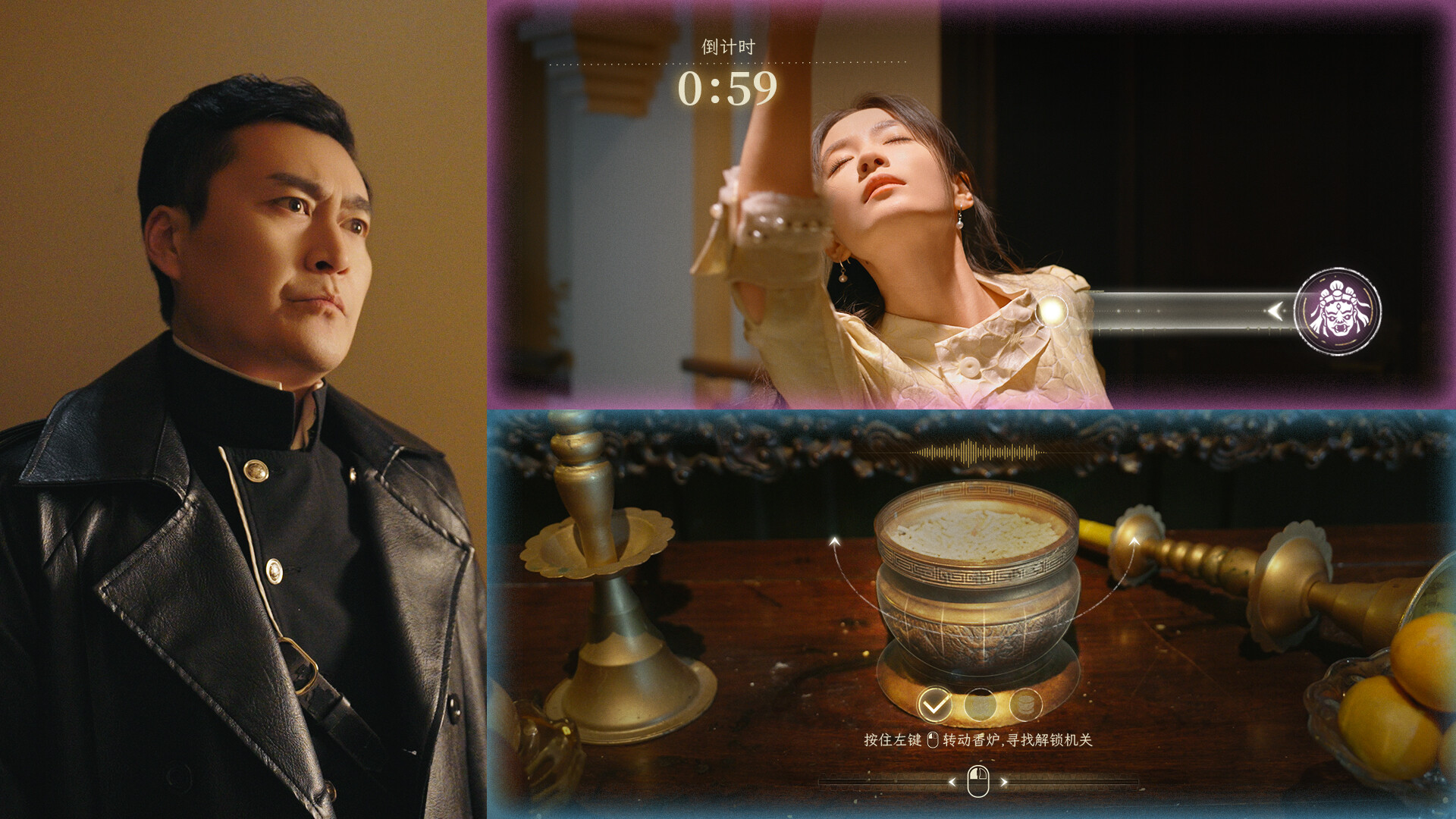
Left: the photo studio dresses a set for you. Right: the two leads in the tram, the shot the game holds while it waits for a second player.
The mechanics are a conversation
The marketing numbers are more than 130 choice points and close to a hundred endings. The number that matters is two.
Simultaneous choices
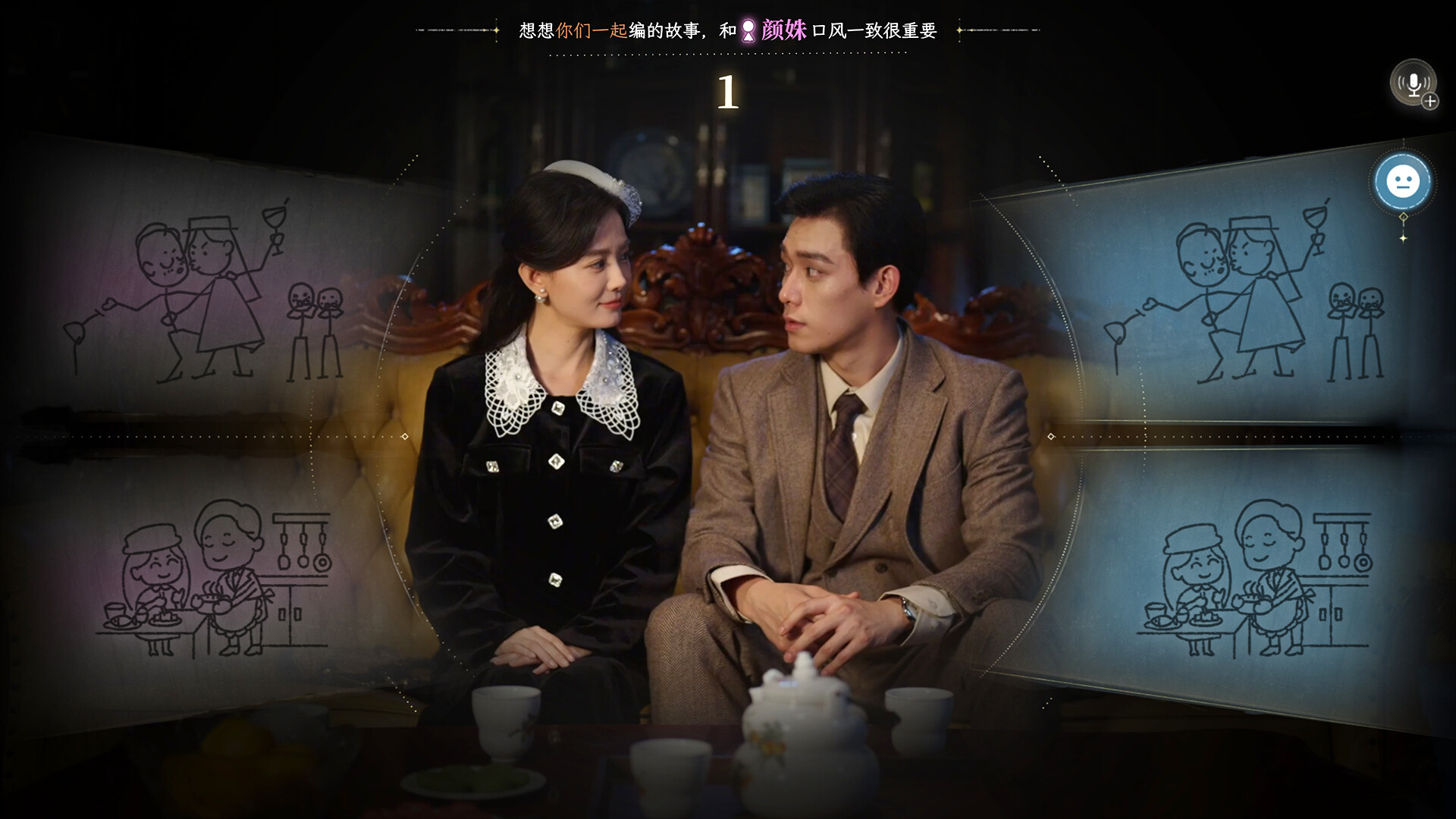
You and your partner answer at the same moment, each watching a live status line that says the other is still deciding. The reveal shows both answers together. Agreement feels like a small conspiracy. Disagreement, judging by the locked nodes on the story tree, opens doors you will not otherwise see.
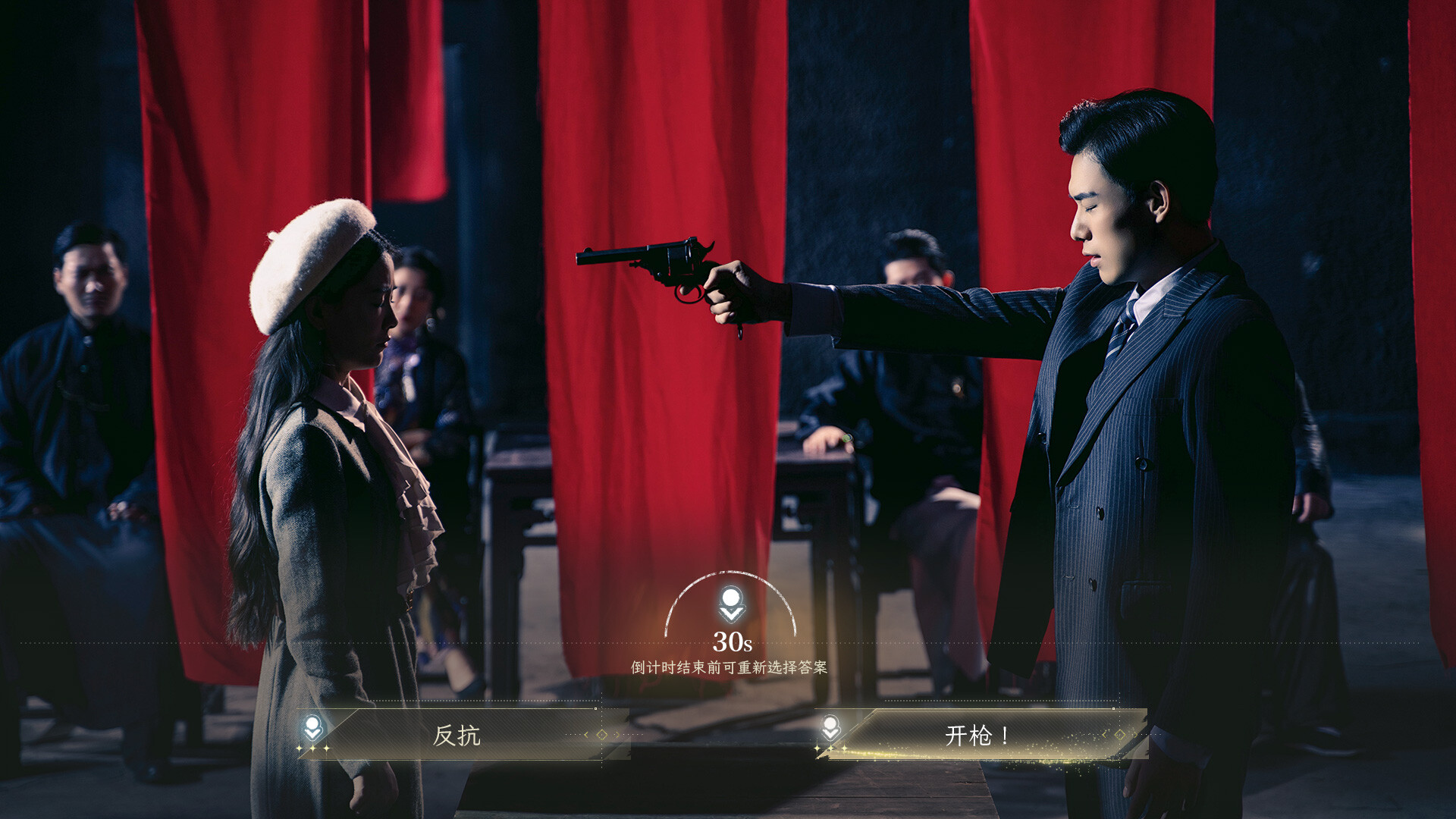
The prompts are written as positions, not as pleasantries. Cover each other, or every man for himself. Resist, or shoot. There is a timer on some of them, thirty seconds, and it runs while a gun is in the frame.
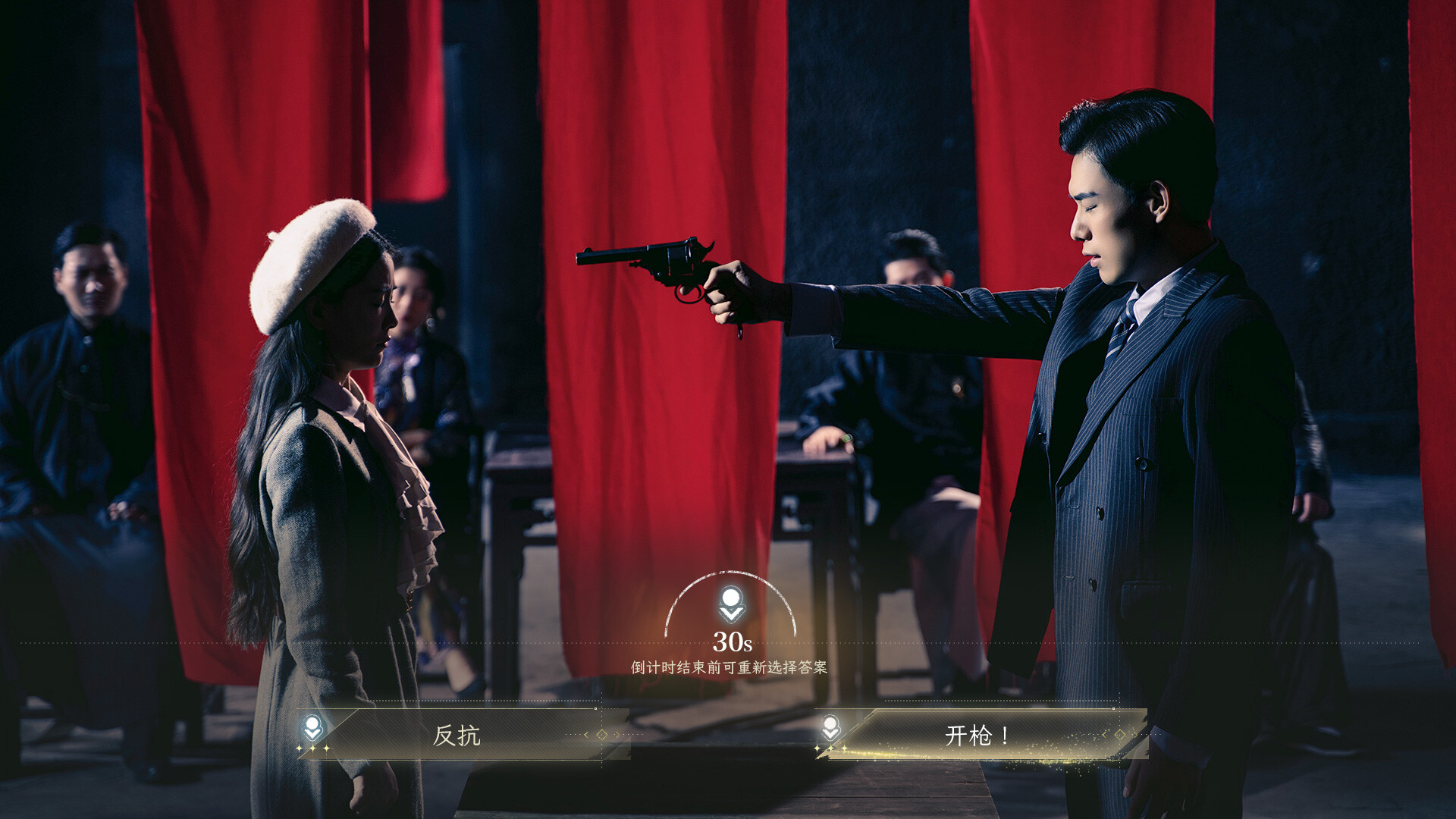 Thirty seconds, a weapon raised, and a partner who may not choose what you choose.
Coordination beats
At intervals the film stops and raises a titled sequence. Ours was called Kite With a Cut String, over the line: the jammed door is the only chance for the inside and the outside to work together. One button appears, take your position, with a bar that fills as each of you presses it. When both are in, the label flips to about to switch, and the scene resumes.
It is a tiny piece of ceremony. It does more for the feeling of being a pair than any amount of scripted banter could.
Stickers, and why they are not a gimmick
Eighty plus illustrated reactions, which sounds like the cheapest feature in the box and turns out to be among the smartest.
Halfway through the vault scene, walls of brass deposit boxes floor to ceiling, an officer searching them while my character walked through, a small anxious cartoon figure popped onto my screen. My partner had sent it. Two people with no shared language beyond the game were reacting to the same shot in real time, and it was funny in the middle of something genuinely tense.
There is a microphone in the room for pairs who want to talk. There is also a setting to hide the stickers, for pairs who do not.
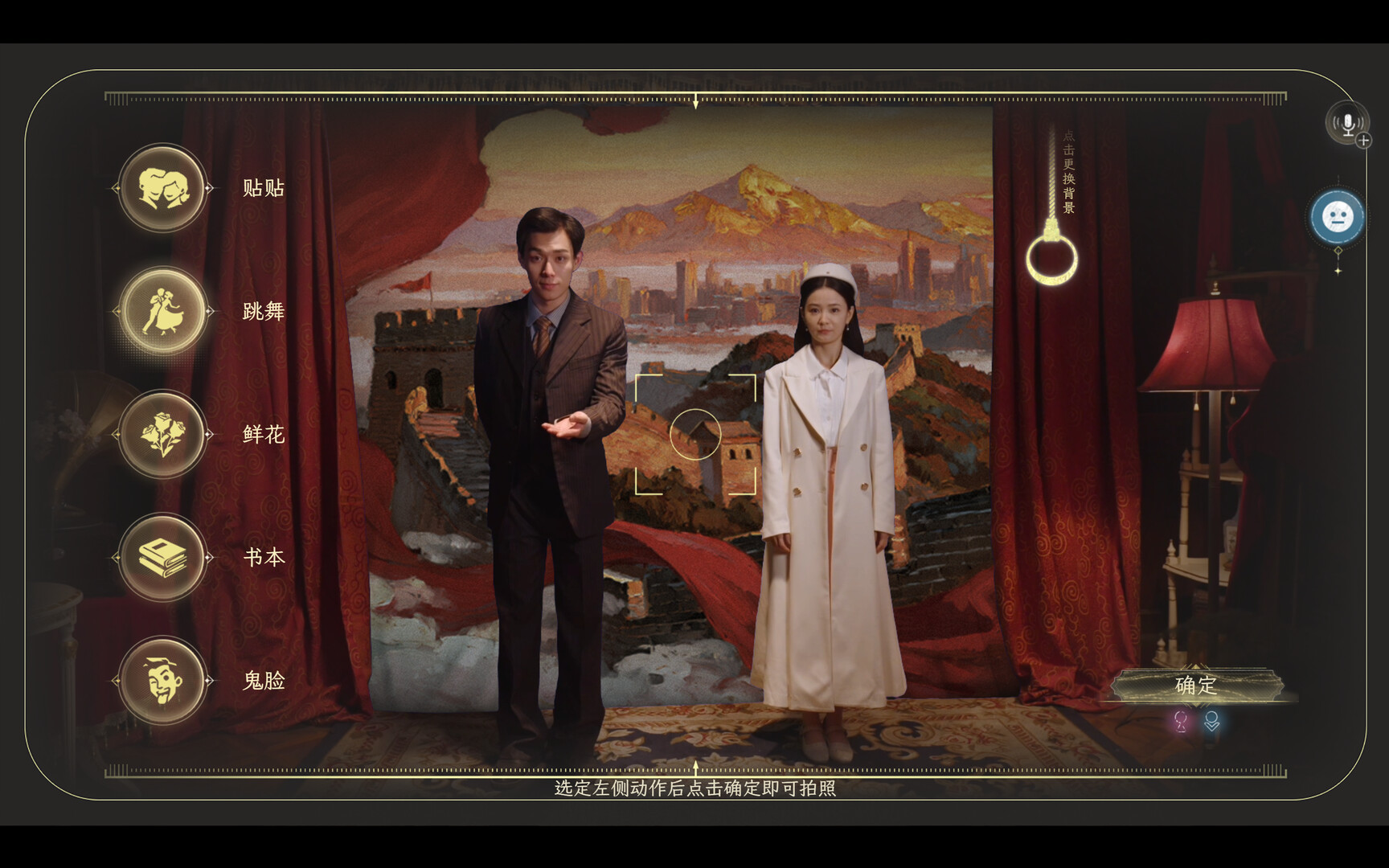
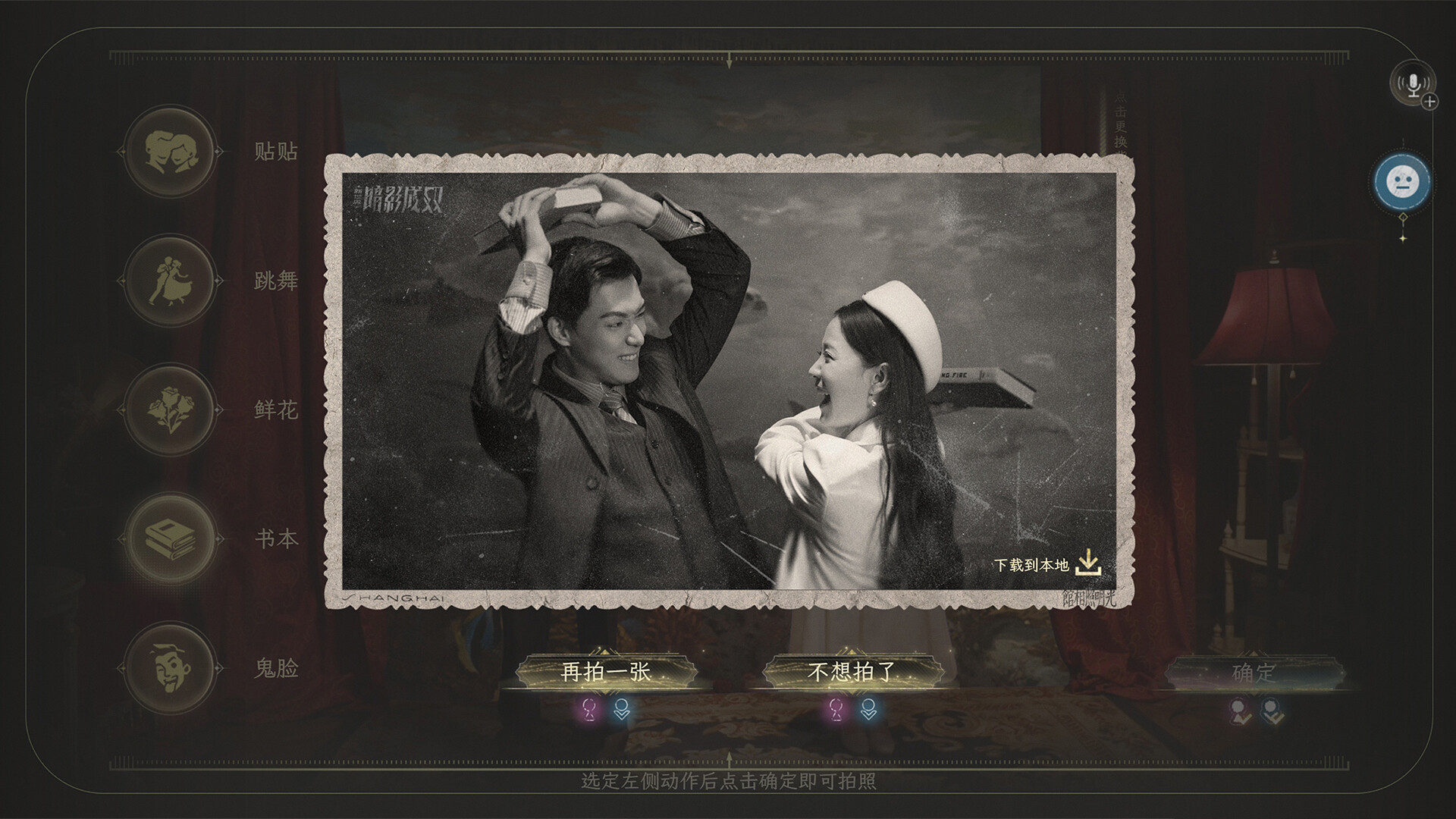 A photo studio where the two of you compose a portrait and choose a gesture: an embrace, a dance, flowers, a book, a deliberately stupid face.
The flourishes nobody required
A photo mode where the two of you build a portrait together, pick a backdrop and pick a pose. An isometric, hand-drawn map of the city for the pursuit sequences, with a small figure moving through streets you have already walked at ground level. A role-swap option so you can run the other half of the same night afterwards.
These are the parts of a production that exist because somebody cared past the point where the spreadsheet stopped asking.
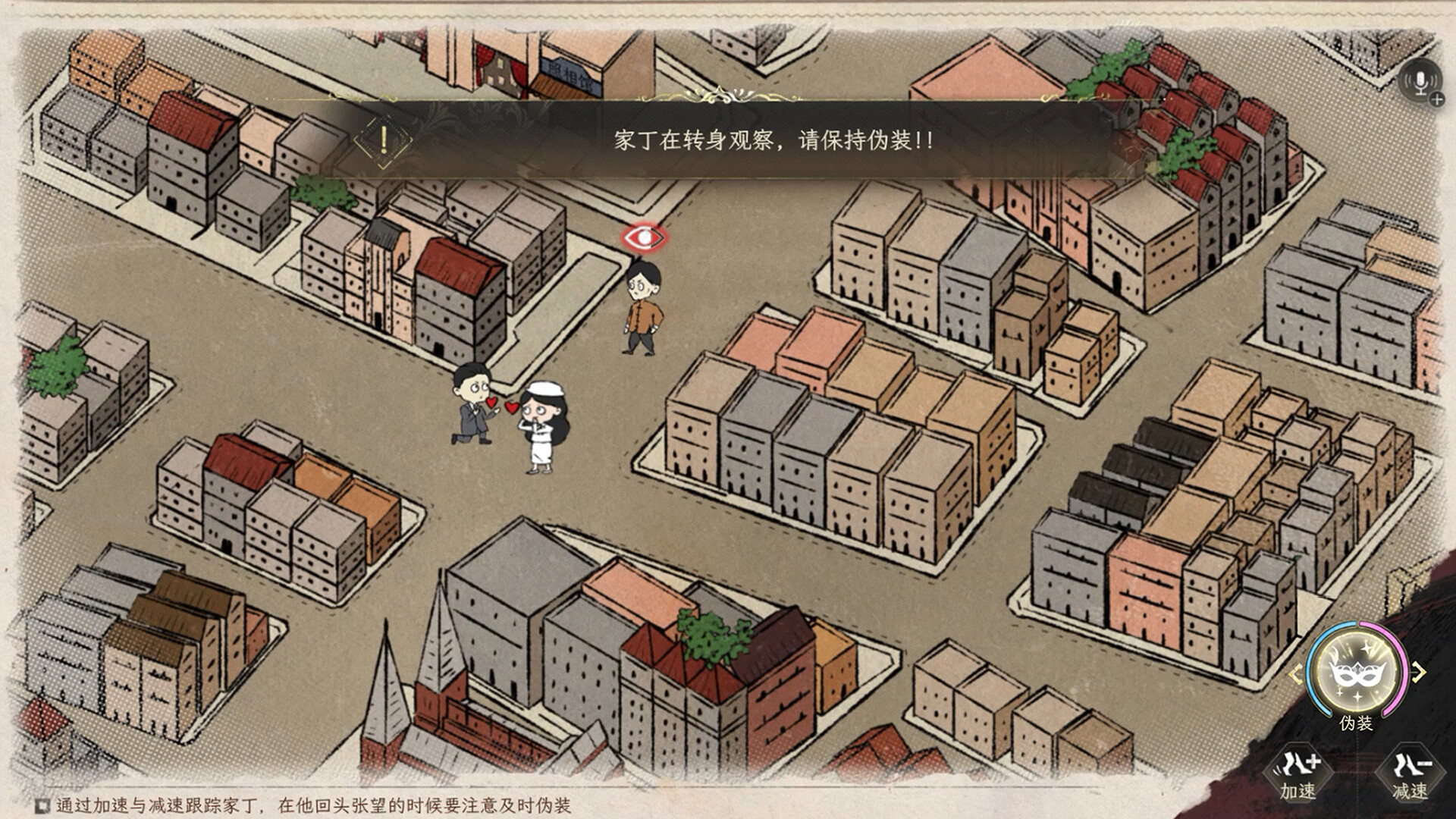 A hand-drawn Shanghai for the chases, sitting inside a live-action film without clashing with it.
The game keeps finding places to put the pair back in the same frame, which is the whole point of it.
The structure is a tree, and that changes how you read an ending
We reached an ending in about an hour.
It is called Children Scattered to the Ends of the Earth, and the card reads, in translation: a brief meeting made you driftwood for each other; a long separation turned you each into a lone boat, rising and sinking with the chaos of the age. Behind it, a rooftop sign reading New World stands in ruins.
It is not a failure screen. It is an ending, and it arrived before the prologue had finished revealing itself.
When the story tree opened afterwards, the prologue alone stood at thirty three percent explored, our branch lit, other nodes still sealed, with a legend naming five different kinds of outcome including chapter ends and failures. So this is not a long film with variations. It is a tree in which the first chapter can already close your story in a way that feels earned rather than punitive.
Replaying is not completionism here. It is the design. And because the branch you took is partly the product of another person’s judgement, a second run with a different partner is not the same run with different buttons pressed.
Two people, incomplete information, one ending that belongs to both of you. Cinema cannot do that. A single-player game cannot do it either.
What it is like in the lobby
Before the film starts, the game quietly stages a smaller drama.
You do not launch a session, you open a room, and the waiting screen is the two leads sitting opposite each other in the tram, not moving, waiting for a second person. The waiting room is a held film shot. Somebody thought about this.
Then strangers arrive, and almost every one of them opens with a request to swap roles. Accept, and you have made your first accommodation with someone you know nothing about. Decline, as I did once out of curiosity to play the agent instead, and you learn something about them too. None of this is written. It emerges from two people negotiating which half of a film they get to be.
 One of the two people whose evening you are holding in your hands.
The letter in the credits
Tucked into the main menu, under Special Thanks, is something I have not seen in a game of this size: forty one pages of beta testers’ names, and a letter to them.
It opens to the pioneers of the New World and it does not read like marketing. It tells the testers that they changed the game before it launched. It says that the version they signed a confidentiality agreement for was, in the studio’s own words, covered in patches and frayed at every edge, and in places could not honestly be called complete. It says the team sat behind the dashboard watching the numbers climb, that the average questionnaire took close to seventeen minutes to fill in, that every time a player found a small piece of hidden craft the team smiled, and every time somebody hit an unforeseen bug they moved on it immediately.
It ends: without you, there would be no New World as it stands. Welcome back, agent. This time, it is the complete story.
You can tell a lot about a production from where it spends its dignity. This one spent some on a thank-you letter that most players will never open.
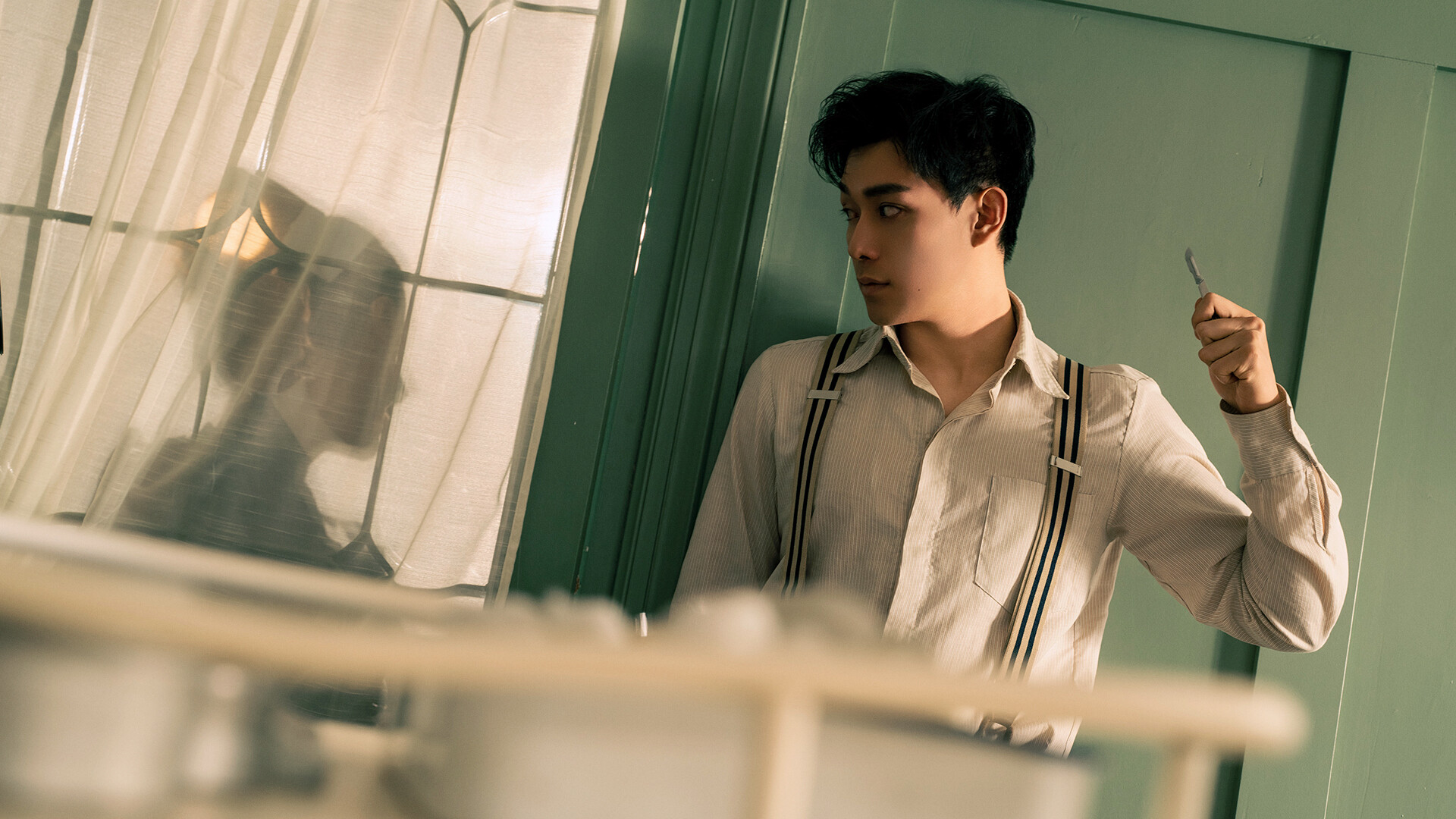 Practical lighting, period dressing, and a frame composed rather than filled.
Where it sits in the genre
It is worth being precise about how unusual this is.
Her Story gave one player a search box. Immortality gave one player a match cut. Revenge on Gold Diggers, the commercial giant of this wave with more than 51,000 Steam reviews, gives one player a very long branching thriller. Dispatch, the Western breakout of the playable-series format, gives one player eight animated episodes. Every landmark this medium has produced has been a solo experience with a single pair of hands on it.
Bonds of Shadows is the first title we have covered where the second player is load-bearing. Not a spectator on a sofa, not a second controller in a party mode, but a person whose incomplete knowledge and independent judgement are the mechanism the story runs on.
That arrives at a moment when the form has stopped being a curiosity, as the numbers now show: China’s box office data platform tracks interactive film as its own category, and the titles in it sell in the millions. A genre that large can afford to experiment. This is what the experiment looks like when a studio with a Cannes selection behind it takes the swing.
The verdict
Interactive film has spent a decade circling one question: what does this form do that cinema cannot? The stock answer, that you choose, was always a little thin, because one person choosing alone in front of a screen is still one person watching a film.
Bonds of Shadows has a structural answer rather than a rhetorical one. Two people. Incomplete information. One ending that belongs to both of you. A stranger on the other side whose judgement you have to read through a cartoon sticker and the length of a pause before a choice resolves.
It is beautifully shot, seriously acted, generous with the features it did not need to build, and built on an idea that no other production in this genre has been brave enough to make mandatory. It is the most interesting thing to happen to interactive film this year, and the first time I have finished a session of one immediately wanting to know what the other person saw.
Play it with someone. If you do not have someone, the lobby will find you one, and that turns out to be its own kind of story.
Played on iPhone, App Store China edition, version 1.0.4.3.7286, on September 23, 2026, the day after release, in matched online sessions with other players. All chapters unlocked by purchase. The game is also on Steam for Windows and macOS, currently in Simplified Chinese with full voice acting. Images are official assets from ALT Lab. Its record in the FMV Directory carries the current store data, and our game page covers the production.
Disclosure: FMVgo is published by AltNext. AltNext does not develop, sell or distribute this game. See our disclosure policy.