Analysis · August 17, 2026 · RT ~2 min
What Dispatch's Millions Mean for Interactive Film
AdHoc's superhero dramedy sold 3–4 million copies and swept awards with a weekly-episode model. The lesson isn't about animation, it's about the format.
If 2025 needed a second proof that the “playable series” is now a mainstream format, Dispatch delivered it four months after Revenge on Gold Diggers did, on another continent, in another visual style, with the same conclusion.
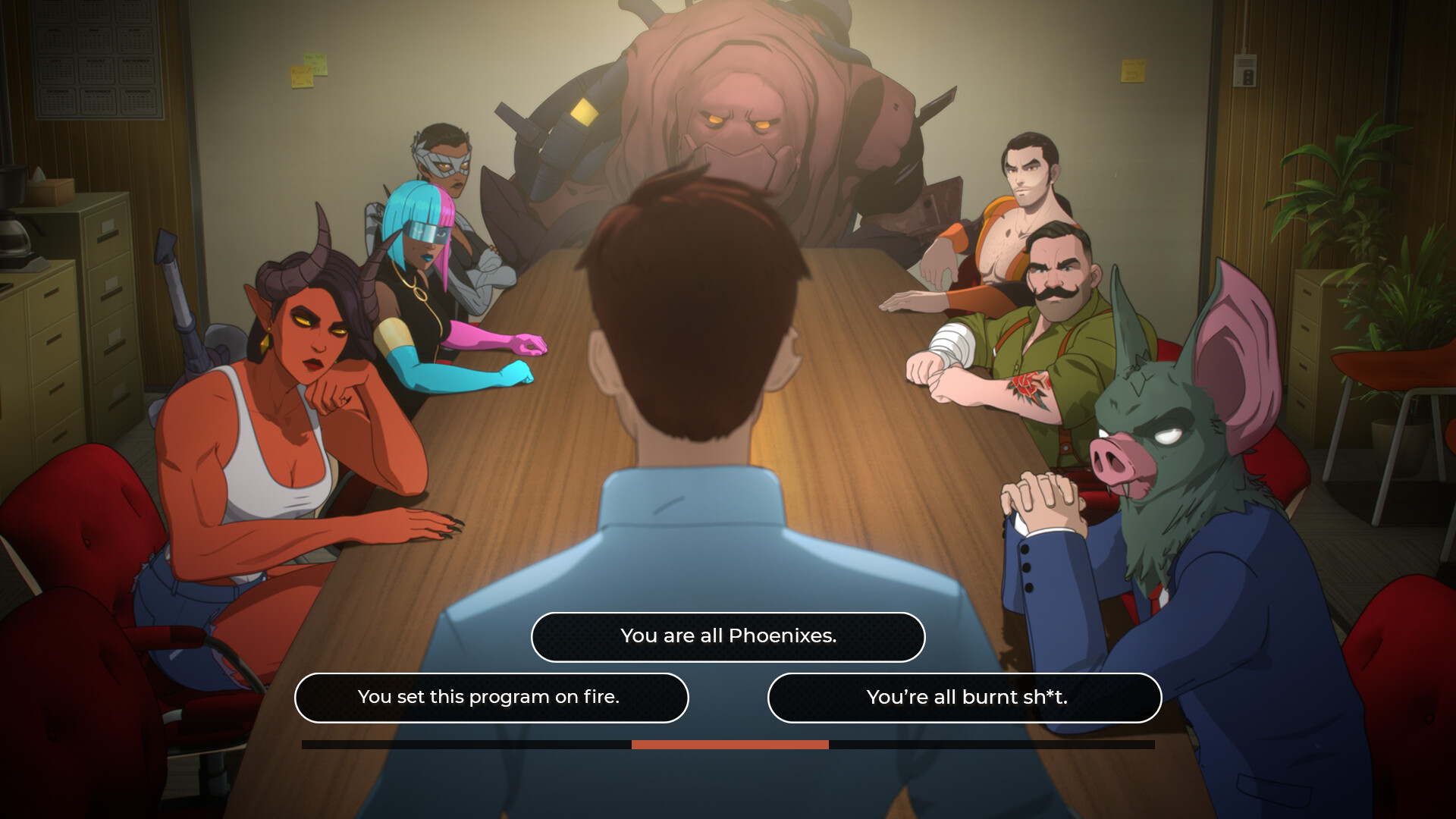 Aaron Paul leads a cast that won AdHoc three BAFTAs, including Jeffrey Wright’s supporting-performance award.
The numbers
AdHoc Studio, founded in 2018 by four Telltale veterans, released its debut as 8 episodes, two per week, like a broadcast season: premiere on October 22, 2025, finale on November 12. The bet on appointment viewing paid off spectacularly. Concurrent players grew every drop week, from about 13,000 at the premiere to a peak of 220,000 the night the finale dropped, the opposite of the decay curve almost every game follows. A million copies sold in ten days became 3 million by year’s end (4M+ by some counts since), and the Steam page now reads “Overwhelmingly Positive” across more than 182,000 reviews (97.5%).
Then came the hardware: three BAFTA Games Awards including Animation and Jeffrey Wright’s supporting-performance win, the Steam Award for Outstanding Story-Rich Game, and a Game Awards run limited only by an eligibility technicality.
Why it matters here
Dispatch is animated, not live-action, but functionally it’s the same product this site covers: a filmed-feeling series where the core verb is choice, the cinematography does the heavy lifting, and the release rhythm is television’s. Put it next to Revenge on Gold Diggers, roughly 51,000 reviews, an 88,000-player peak, a chart-topping run driven almost entirely by the Chinese market, and 2025 resolves into a single global story: audiences on two continents, in two visual styles, paid premium prices for films that answer back.
Three lessons we’d underline:
- Episodic cadence built the audience. Weekly drops turned a game launch into a season of appointment viewing, with each week’s cliffhangers recruiting the next week’s players. That model is native to the short-drama world the Chinese wave comes from, the two traditions are converging on the same playbook.
- Screen-actor star power now converts. Aaron Paul’s casting wasn’t a stunt; it was the marketing, the quality bar, and ultimately the awards case. Expect every serious interactive film project, East and West, to chase recognizable faces from here on.
- The phone lane is still open. For all its success, Dispatch has no mobile version and none announced. The biggest playable-series audiences of the next wave are on the screen where short drama already lives, which is exactly where the Chinese wave is heading first.
For the full context on the wave Dispatch unknowingly confirmed, read How Chinese Interactive Films Conquered Steam.